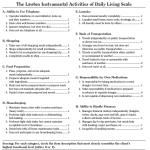
Lawton Instrumental Activities of Daily Living Scale
The Lawton Instrumental Activities of Daily Living (IADL) scale is designed to assess a person’s ability to perform more complex activities necessary for independent living within the community. These activities include managing finances, shopping, preparing meals, using transportation, housekeeping, and handling medications. Unlike basic daily living functions, such as bathing, dressing, and eating, these instrumental skills are often the first to decline, serving as early indicators of a need for assistance.
Using the Lawton IADL in myeloma practice?
Find free similar tools, education and clinical updates to support your work on the HCP Hub.
The IADL scale is a valuable tool for healthcare professionals in evaluating a patient’s functional autonomy and determining the level of support required to maintain their independence.
Use Case
Type
Source
You might also like
MyPOS
MyPOS is a myeloma-specific version of the Palliative care Outcome Scale recently developed and validated to measure myeloma-specific quality of life issues and intended for use in clinical care.
Other Assessment ToolEORTC QLQ-MY20
The European Organisation for the Research and Treatment of Cancer Myeloma Module Quality of Life Questionnaire (EORTC QLQ-MY20) is a specialised tool designed to assess the quality of life in myeloma patients.
Other Assessment ToolEORTC QLQ-C30
This essential tool facilitates valuable insights into patients’ physical, emotional, and social well-being, ultimately supporting more informed treatment decisions and care strategies. By utilising the EORTC QLQ-C30, healthcare professionals can better understand the unique challenges faced by cancer patients and survivors, leading to tailored interventions that address their specific needs.
Other Assessment Tool